Bodywork modalities
Aroma Massage in Japan: How It's Different From Western Aromatherapy
Published April 30, 2026 · By Osaka Wellness Guide editorial team
If you spend any time in Osaka department stores or shopping malls, you will encounter aromatherapy retailers — small stores devoted entirely to essential oils, diffusers, and accessories. The category is bigger in Japan than most foreign visitors realize, and the bodywork side of it — aroma massage — is one of the most popular modalities in the Japanese wellness market.
For travelers, this is the closest Japanese equivalent to a Western “spa massage”. But there are some distinctly Japanese characteristics worth understanding before you book.
What aroma massage is in Japan
Aroma massage in Japan blends:
- Western massage technique foundation — long strokes (effleurage), kneading (petrissage), light friction
- Aromatherapy theory — essential oils selected for both olfactory effect and skin absorption
- Japanese refinement — careful pressure adjustment, attention to the client’s response, precise movement
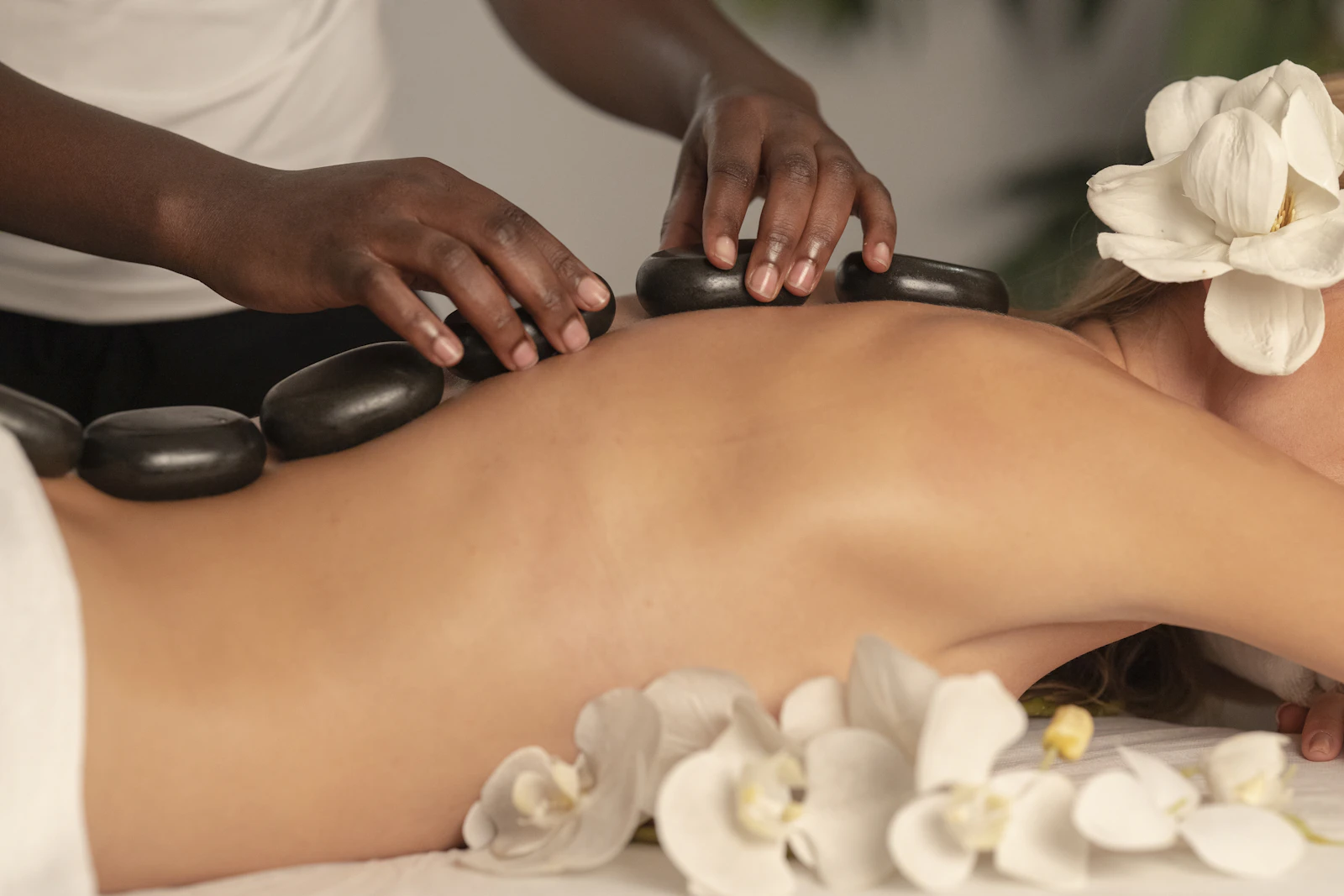
The session is performed with the client undressed (typically to underwear or unclothed), draped with towels, on a treatment table with oil applied. This is the exception in Japanese bodywork — most other modalities are performed clothed without oils.
Because of this, aroma massage tends to feel more familiar to Western travelers than shiatsu or anma. The atmosphere is also usually more spa-style: dim lighting, soft music, warm towels, and the carefully blended scent of essential oils.
How it differs from Western aromatherapy
Several characteristic differences:
1. The aromatherapy theory is taken more seriously
Japanese practitioners often have specific aromatherapy certifications (アロマセラピスト, with various organizations issuing credentials). The selection of oils is often deliberate — based on a brief intake about your concerns, mood, season, and skin type. Western aromatherapy can be more casual, with oil selection sometimes based purely on what smells nice.
2. The technique blends seitai-influenced sensitivity with Western fundamentals
A Japanese aroma massage practitioner often adjusts pressure and pace based on subtle cues that Western relaxation massage might not notice — the way your shoulders are holding, your breath rate, where you are tense. The work is technically similar to Western massage but more responsive in execution.
3. The atmosphere is more deliberately designed
Japanese spa environments are often more carefully composed than their Western counterparts — lighting, scent, sound, even the texture of towels. The session is treated as a designed experience, not just a technique applied.
4. The pace is calmer
A typical Japanese 90-minute aroma massage often spends more time on each region than the equivalent Western session. The expectation is that you will fall asleep at some point.
What a session looks like
A typical 90-minute aroma massage in Osaka:
1. Intake (10 minutes)
- Brief health questionnaire
- Discussion of mood, energy, recent stress, sleep quality
- The practitioner may offer 2–3 oil blend options to smell — you choose what feels right
2. Preparation (5 minutes)
- You change in private, undressing to your comfort level
- Lie face-down on the table, draped with towels
3. The session (70 minutes)
- Back, shoulders, neck (face-down)
- Arms and hands
- Glutes (towel-draped)
- Legs (back of legs face-down, then turn over for front)
- Feet
- Decolletage and face (often last, with a different oil)
4. Closing (5 minutes)
- A warm towel to remove excess oil
- A glass of water or tea
- A brief discussion of what the practitioner observed
Pricing in Osaka
| Length | Typical price range |
|---|---|
| 60 minutes | ¥9,000–¥14,000 |
| 90 minutes | ¥13,000–¥20,000 |
| 120 minutes | ¥18,000–¥28,000 |
Premium spa hotels (within Westin, Hilton, Conrad, etc.) typically charge 30–60% above these ranges. Independent boutique spas in Umeda and Shinsaibashi sit in the upper end of the standard range.
When aroma massage is a good fit
- You want a relaxing, spa-like experience
- You enjoy the tactile and olfactory pleasure of oil and scent
- You have time for a longer session (90 min preferred)
- You are comfortable being undressed under towel draping
- You want something that feels familiar rather than culturally unfamiliar
When something else is a better choice
- You want to experience something distinctively Japanese (choose seitai, anma, shiatsu)
- You are short on time (choose foot reflexology or shiatsu)
- You have specific postural concerns (choose seitai)
- You don’t want to undress (choose any clothed modality)
- You have an event right after and don’t want to be oily (choose clothed modalities)
Specific use cases for travelers
A “treat yourself” mid-trip evening
After 3–4 days of active sightseeing, a 90-minute aroma massage in a quiet spa setting is one of the higher-value treats available in Osaka. Combine with a quiet dinner afterward.
A pre-special-event preparation session
If you have a wedding, anniversary dinner, or formal occasion during your trip, aroma massage the morning of (with a longer-than-normal cool-down period) can leave you genuinely glowing.
A romantic-trip experience
Many Osaka spas offer couples’ rooms. This is one of the few bodywork experiences set up to be shared.
A note on quality variation
Aroma massage quality varies more than other Japanese bodywork modalities, partly because the entry barrier is lower (no national license required, just private aromatherapy certification). Signals of quality:
- Practitioner’s specific aromatherapy training mentioned
- Real essential oils, not synthetic fragrance oils
- A proper intake conversation, not just “what scent do you like”
- Reasonable session length (60+ min)
- Not bundled with high-pressure sales of oils or skincare afterward
Studios attached to reputable spa hotels and well-established independent spa names tend to be reliable. Cheaper chain options vary; reading recent reviews of a specific location matters.
The bottom line
Aroma massage in Japan is the modality that bridges most easily for travelers used to Western spa culture. It is not the most distinctively Japanese option (shiatsu, anma, seitai are more so), but it is high quality, well-regulated by professional norms, and reliably delivers the kind of spa experience travelers often plan for. Worth one of your bodywork slots if your itinerary allows for a longer session and an unhurried evening afterward.
Frequently asked questions
What's the difference between aroma massage and Swedish massage?
Aroma massage uses essential oils blended with carrier oils, with attention to the olfactory and emotional effects of the scents. Swedish massage focuses on tissue manipulation; the oil is functional rather than aromatic. Japanese aroma massage often combines Swedish technique with carefully chosen aromatherapy.
Will I smell strongly afterward?
Mildly. Quality essential oils evaporate over a few hours, and the carrier oil leaves your skin moisturized but not heavily perfumed. Most studios offer a quick rinse station if you have evening plans.
Are the oils used in Japan high quality?
Generally yes at reputable studios. Japan has a sizable aromatherapy industry with formal quality standards. Look for studios that source from established brands and that mention the practitioner's aromatherapy training (アロマセラピスト資格).
Related in Bodywork modalities
- Sotai vs Seitai: Two Near-Homonyms in Japanese Bodywork That Travelers Constantly Confuse — Sotai and seitai sound almost identical but are two distinct Japanese bodywork traditions.
- Abhyanga in Osaka: Your Complete Guide to Ayurvedic Oil Massage — Discover abhyanga — India's ancient full-body warm-oil massage — now available at select O
- Herbal Ball Massage in Osaka: What to Expect from Japan's Favourite Compress Treatment — Everything international tourists need to know about herbal ball massage in Osaka — the te
Sources cited
Featured studios for this guide
Where to actually go
Editorial picks from our small list of verified foreign-friendly bodywork studios in Osaka.